Crab Nebula's Evolution Studied by Hubble Telescope
Introduction
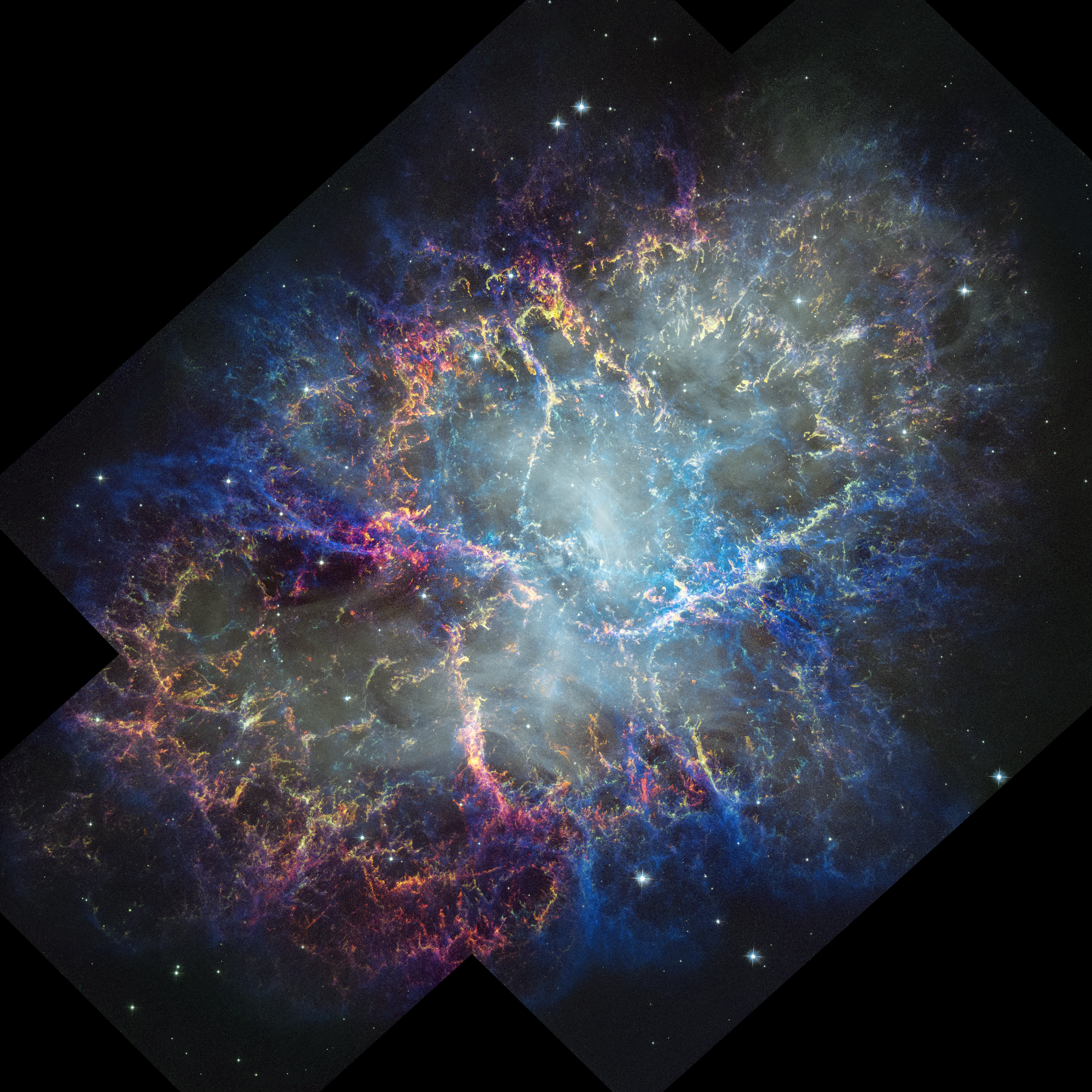
This blog post explores recent findings from NASA's Hubble Space Telescope, focusing on its latest capture of the Crab Nebula. The Crab Nebula is one of the most famous supernova remnants in our galaxy, known for its intricate structure and dynamic nature.
Background / Context
The Crab Nebula was first observed as a supernova remnant in 1735 by English astronomer John Bevis. It is believed to have been formed after the collapse of a massive star, leaving behind a pulsar—a rapidly rotating neutron star emitting intense beams of electromagnetic radiation.
Key Developments
- NASA's Hubble Space Telescope captured the Crab Nebula in unprecedented detail.
- The image showcases the complex interactions between shock waves and molecular clouds within the nebula.
- Astronomers can now study how this supernova remnant continues to expand over time, providing valuable insights into astrophysical processes.
Analysis
The Hubble Telescope's observations reveal significant changes in the Crab Nebula since previous studies. These new images offer a clearer view of the intricate filaments and jets that comprise the nebula. The dynamic nature of the Crab Nebula, including its pulsar component, remains one of the most intriguing aspects of astronomical research.
What This Means
These findings are crucial for both scientific discovery and educational purposes. They provide a vivid illustration of how astrophysical phenomena evolve over time, offering insights into the life cycles of stars and supernovae. Moreover, such studies help improve our understanding of cosmic processes and contribute to technological advancements in telescopic capabilities.
Conclusion
The detailed image captured by NASA’s Hubble Space Telescope offers a fresh perspective on one of astronomy's most captivating objects—the Crab Nebula. This work highlights the power of modern technology in unraveling complex astrophysical mysteries, underscoring humanity's relentless pursuit to comprehend our universe.